
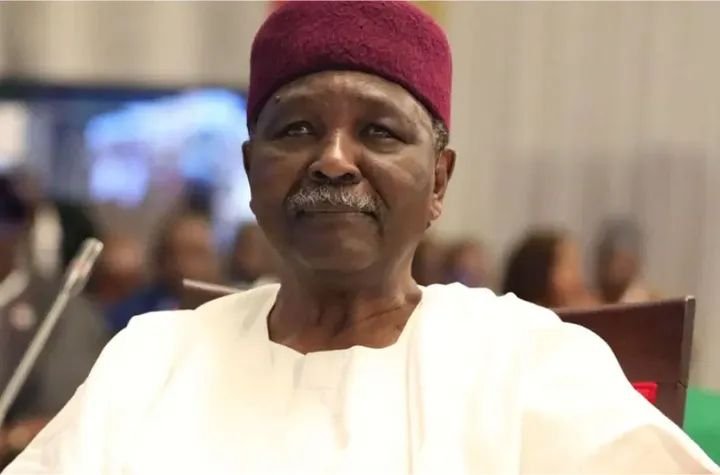
Former Head of State, General Yakubu Gowon, has revisited one of the most controversial periods in Nigeria’s history, accusing late Biafran leader, Chukwuemeka Odumegwu Ojukwu, of frustrating several efforts aimed at preventing the Nigerian Civil War.
Gowon made the claims in his autobiography, where he reflected on the political crisis that followed the January and July 1966 coups and the events that eventually led to the outbreak of war.
According to him, repeated attempts by the Federal Military Government to peacefully resolve the growing tensions in the country were undermined by Ojukwu’s actions.
“Ojukwu deliberately and effectively thwarted every effort we made to amicably resolve our national issues,” Gowon wrote.
The former military ruler explained that tensions escalated after the killings of Igbos in parts of Northern Nigeria triggered fear, anger and increased calls for secession in the Eastern Region.
He said the Federal Government agreed to the January 1967 meeting in Aburi, Ghana, with genuine hopes that dialogue could still preserve the unity of the country.
“We went to Aburi with open minds and with the sincere hope of finding a basis for national reconciliation,” he stated.
The meeting, facilitated by former Ghanaian leader Lt.-Gen. Joseph Arthur Ankrah, brought together Nigeria’s top military officers at a time the country was deeply divided by coups, ethnic violence and mistrust within the armed forces.
However, Gowon said disagreements emerged after the meeting, as both sides returned with different interpretations of the Aburi Accord.
According to him, Ojukwu’s interpretation would have significantly weakened the powers of the Federal Government and threatened the survival of Nigeria as one entity.
“What was presented by Ojukwu as the Aburi Accord was, in reality, his own interpretation of our discussions,” Gowon wrote.
He maintained that despite rising tensions, his administration continued to pursue peaceful solutions to prevent war.
“At every stage, we tried to preserve Nigeria without resorting to war,” he said.
The autobiography revisits the long-standing debate over whether the Aburi Accord represented Nigeria’s last opportunity for peace before the country descended into conflict.
Rejecting claims that the Federal Government acted in bad faith, Gowon described the period as one dominated by fear, suspicion and weakening trust among military and political leaders.
“Ojukwu’s actions made peaceful settlement increasingly difficult,” he added.
Gowon also acknowledged the killings of Igbos following the failed coups of 1966, admitting that the violence created deep fear and trauma among Eastern Nigerians living outside the region.
He said the massacre of Igbos deeply disturbed him and further complicated efforts to restore national unity.
“I understood the fears of the Easterners. But the breakup of Nigeria was never an option I could accept,” he stated.
The former Head of State explained that communication between both sides continued to deteriorate in the months leading to Biafra’s declaration on May 30, 1967, as mistrust hardened positions and reduced chances for compromise.
“We were confronted with a situation in which compromise was becoming almost impossible,” he wrote.
Gowon also defended the creation of 12 states shortly before the declaration of Biafra, saying the move was intended to